
Investment with a sustainable focus.


Purchase of forest in the Baltics.

For some, investing is all about maximizing returns. For others, it means just as much, to invest conscientiously, behave properly, think about future generations, take care of the environment and take social responsibility.

With an investment with a sustainable focus, you can so to say get the best from both sides. Sustainable focus and return are not mutually exclusive. On the contrary, sustainability is becoming an ever-increasing focus area.

Sustainable investments are more than wind turbines and solar cells. With an investment in forest, you can combine the investments and take advantage of similarities and differences.
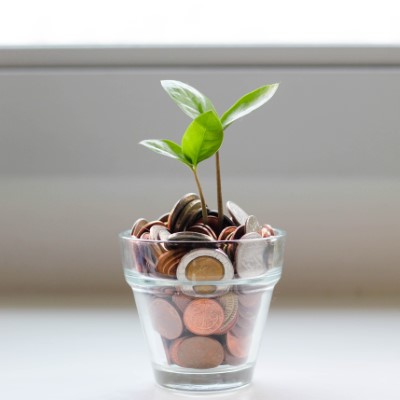
In recent years, the Baltics have developed into an attractive market for forest investment as a green and sustainable alternative to the more traditional investments. The prospect of stable returns, low risk, positive liquidity, and not least a climate-friendly profile, make it an attractive investment object.

In the Baltics, one hectare of forest costs on average 7-10,000 EURO, while one hectare of similar forest costs 4-6 times more in Western Europe. So you get a lot of forest for the money in the Baltics.
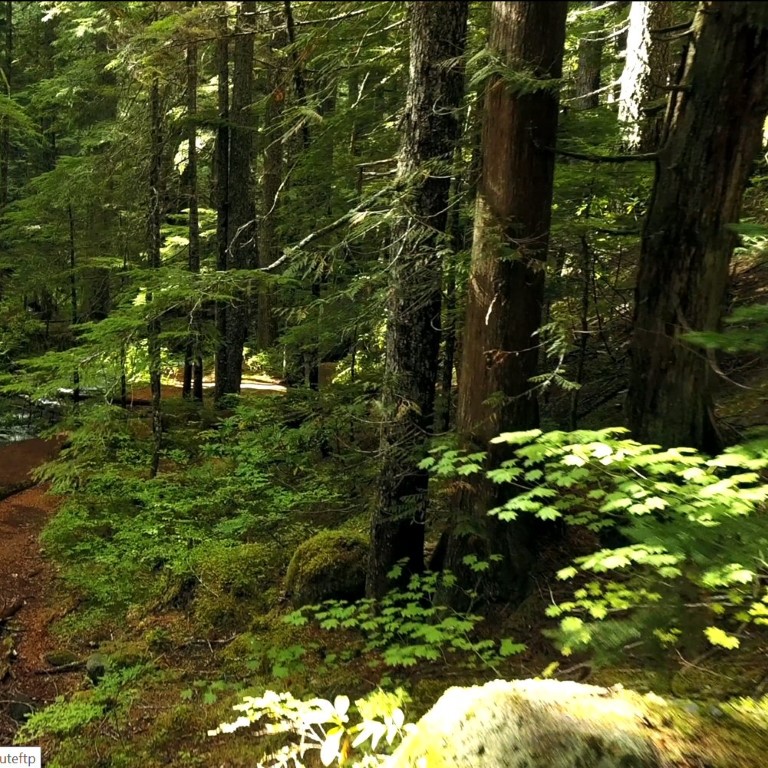
Trees grow regardless of the business cycle. The trees have a natural, organic growth of approx. 3% per year and the unique thing about forestry is that you can postpone or advance your harvest depending on the current prices of timber. Are the prices e.g. low for a few years, then you can save the growth for years with better prices, and you have the opportunity to optimize returns and dividends from your wind turbine and solar cell investments.

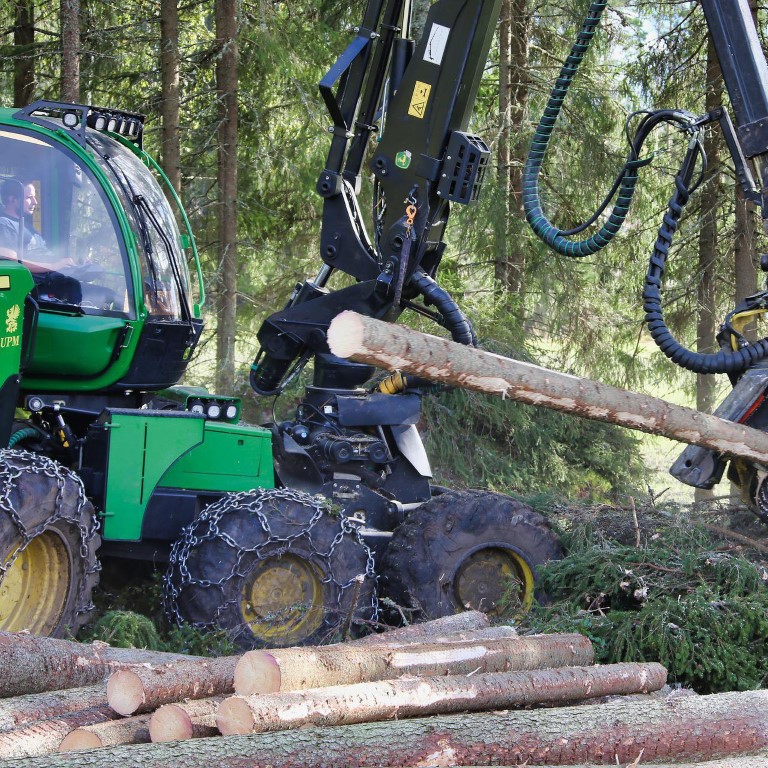
In 2020, approx. 56% of Estonia's area and approx. 55% of Latvia's area covered by forest. Forestry is an important sector in the Baltic countries, they are skilled in forestry and the latest technology and methods are implemented. Drones are used e.g. for mapping, monitoring and planning the operation, modern and efficient machines perform a large part of the work and the timber is processed in efficient sawmills. The products are sold, among other things, to the furniture industry.

The forest areas are real estate and the operation provides a stable return with a relatively low risk. In addition to a stable operating profit, one can, over a number of years, expect a significant economic gain on a forest property. Over the past many years, forest prices have been rising because the industry is demanding more and more wood for its products. In practice, the trade price of the forest is determined by supply / demand in the local area where the properties are located, the quality of the wood and by how much has been harvested.

There is a well-functioning, open and lively real estate market, and the smaller properties are quickly marketable. It creates flexibility and liquidity in the investment when the portfolio needs to be adjusted.

The investment structure is simple and transparent. The investor typically owns his own forests via a local, forest-owning company (equivalent to an Ltd.). This ensures that you as an investor can decide to increase or decrease your investments, depending on your needs and interests.

Forest investment in the Baltics can thus be a natural part of a sustainable portfolio and which is naturally linked to wind turbines and solar cell investments.
Jesper Kjær ApS is a independent developer and brokerage company. We deal with the brokerage of investment projects in Eastern Europe, including the brokerage of large farms, manors, estates, forest properties and hunting properties in Poland, Estonia, Latvia and Lithuania.

Our position is based on a deep insight into the local opportunities - and the ability to be at the forefront of tomorrow's currents. We have an in-depth knowledge of market conditions and opportunities.

We are thus the natural contact if you are looking for an independent advisor and intermediary within investment in Poland, Estonia, Latvia and Lithuania.

In our brokerage business, we work discreetly to create a connection between interested buyers and sellers. We have contact with expertise in all general and specific questions regarding real estate trading.

Forest- and agricultural properties:

Here you will find a selection of   forests for sale     og   agriculture for sale   .

... ... but contact us if you have specific wishes.


  Back


Frequently Asked Questions
about forestry and nature investments in Central and Eastern Europe


Analysis of Forest Investment in the Baltics

Investing in Baltic forests is characterized as a stable, low-risk, and sustainable opportunity. These forests act as a "green" asset class that provides both biological growth and potential land value appreciation.

  • Market Dynamics: The restoration of independence in the 1990s led to many small, fragmented forest plots being returned to private owners. This creates a unique market where investors can either buy small individual plots or consolidate them into large, high-value portfolios.
  • Economic Performance: Historical data shows significant growth, with average forest prices doubling between 2016 and 2020, representing an approximate 20% annual increase in value.
  • Biological Growth: Forests provide a steady 'operating income' through biological growth, averaging about 3% per year regardless of economic market conditions.
  • Operational Performance: Historical data shows significant operational performance, with typical average operating profits of 5-7% of the investment.
    The high operational performance and productivity of Baltic forests are not just a stroke of luck - they are the result of a 'perfect storm' of biological advantages, historical land-use shifts, and some of the most advanced forestry technology in the world.
  • Sustainability: Forests are increasingly sought after by climate-conscious investors for their role in CO2 reduction and biodiversity preservation.


Q&A About Jesper Kjær ApS

  • What is Jesper Kjær ApS and when was it established?
    Jesper Kjær ApS is an independent developer and broker company that has been facilitating investment projects in Eastern Europe since 2001, with a specific focus on agricultural, forestry and nature properties since 2003.

  • Which countries does Jesper Kjær ApS operate in?
    The company operates in the Czech Republic, Poland, Lithuania, Latvia, and Estonia, specializing in agricultural, forestry and nature investments in these Central and Eastern European countries.

  • What services does Jesper Kjær ApS provide?
    With over 25 years as a developer and mediator, we identify investment opportunities and guide investors through the complex process of acquiring the desired business.
    We offer a comprehensive range of services, including:
    • Market screening and identification of suitable properties (both on-market and off-market).
    • Acquisition advisory and negotiation support.
    • Coordination of legal, financial, and technical due diligence support.
    • Leveraging our local network and deep market knowledge to find the best opportunities.

  • How can potential investors contact Jesper Kjær ApS?
    You can contact Jesper Kjær directly by telephone at +45 5136 1495 or by e-mail to jk@jkaps.dk


Q&A About Forest Investment Opportunities in the Baltics

  • What makes the Baltic countries an attractive region for forest investment?
    The Baltics offer a unique combination of factors: competitive land prices (3-6 times lower than in Western Europe for similar forest), high forest productivity due to the hemiboreal climate zone, stable political and economic environments as EU and NATO members, and a modern, export-oriented timber industry.

  • How does the price of forest land in the Baltics compare to Western Europe?
    It is still significantly more affordable. A hectare of forest in the Baltics typically costs on average 3-6 times less than a comparable hectare of forest in Western Europe.

  • What are the main tree species I would own in a Baltic forest?
    The forests are dominated by conifers like scots pine and norway spruce. Common broadleaf trees include silver birch, as well as aspen, black alder, and grey alder. In more fertile areas, you can also find 'noble' hardwoods like oak, ash, and lime trees.

  • How does the ownership structure work for a foreign investor?
    The structure is designed to be simple and transparent. An investor typically owns the forests through a local, forest-owning company (Special Purpose Company). This structure provides clear ownership, allows for flexibility in scaling the investment, and can offer good opportunities for tax optimization.

  • What is the typical size of a forest investment? Can I buy a small plot?
    Yes, there is a wide range of options. The return of land to original owners in the 1990s resulted in many small properties. You can find small plots of, for example, 2-10 hectares, as well as large portfolios of several hundred or thousands of hectares. The smaller properties are often praised for their better marketability and liquidity.

  • Is the forest market liquid? Can I sell my forest when I want to?
    Yes, there is a well-functioning, open, and lively real estate market for forests. The smaller property sizes contribute to flexibility and liquidity, as the buyer's capital does not need to be as large for each transaction, creating a larger pool of potential buyers.

  • How is the return on a forest investment generated?
    Returns are generated from two main sources:
    • Biological growth: Trees naturally grow by approximately 3% per year in volume, which can be harvested and sold as timber.
    • Land value appreciation: Over the long term, the price of forest land has shown a stable increase.

  • Is it true that I can time my timber harvest to get the best price?
    Absolutely. This is one of the unique advantages of forestry. Unlike agricultural crops, you are not forced to harvest at a specific time. If timber prices are low one year, you can let the trees continue to grow and postpone the harvest until market prices improve. This allows you to optimize your returns.

  • What is the "hemiboreal zone," and why is it important for my investment?
    The Baltic states are located in the hemiboreal zone, a transition area between the temperate forests of Central Europe and the northern taiga. This "sweet spot" results in a resilient and productive mix of coniferous and broadleaf tree species, making the forests less susceptible to diseases and pests, which contributes to lower investment risk.

  • How do forest investments fit into a sustainable or "green" portfolio?
    Forests are a cornerstone of sustainable investing. They act as significant carbon sinks, absorbing and storing CO2. They also support high biodiversity and provide the renewable resource (wood) needed to replace fossil-fuel-based products. It is natural to combine forest investments with wind or solar in a diversified sustainable portfolio.

  • What is the difference between a "public sale" and a "discreet transaction"?
    • Public sale: The property is openly marketed on websites and in media.
    • Discreet transaction (or off-market): The sale is handled confidentially. The property is not publicly listed; instead, it is offered directly to a network of potential buyers. This is common for larger or sensitive portfolios and protects the seller's privacy.

  • Are the forests certified for sustainable management?
    Yes, the broader Baltic forestry sector is characterized by a high level of professionalism and sustainability. Many forests are certified under international standards like PEFC or FSC, ensuring that management practices protect biodiversity, limit harvests to sustainable levels, and preserve the forest's long-term health.

  • What are the main risks associated with investing in Baltic forests?
    The risk is generally considered low. Forest fires and severe insect attacks are relatively uncommon due to the resilient, mixed-species nature of the forests. The main market risks are fluctuations in global timber prices, which can be managed by the flexibility of harvest timing. Political risk is mitigated by EU and NATO membership.

  • What kind of due diligence should I conduct before buying a forest?
    Standard due diligence includes legal title verification in the official land registers, checking for any encumbrances, assessing the quality and volume of the standing timber (often with an appraisal report), and understanding local regulations.

  • I have heard that major investors are buying forests in the Baltics. What does that mean for me?
    This is a very positive sign for the market. Major acquisitions confirm the region's long-term potential, stable investment environment, and the high quality of its timber resources. This institutional interest adds credibility and liquidity to the market.

  • Can I combine a forest investment with other activities like hunting or recreation?
    While the primary focus of the listed opportunities is on commercial timber production, the forests are rich in biodiversity, including wildlife such as elk, deer, and wild boar. However, hunting rules can be complicated, and hunting rights do not always automatically follow land ownership.
    The Baltic nature is indescribable and offers many recreational opportunities for the dedicated nature lover.

  • How much capital do I need to start investing in Baltic forests?
    The entry level is very flexible. You can invest in a small plot of a few hectares for a few tens of thousands of euros. For larger, professionally managed portfolios, an investment of around €1,000,000 or more might be relevant to ensure cost-effective management.

  • What is the current trend in Baltic forest land prices?
    The trend is strongly positive. Forest land prices have shown a significant annual increase over recent years and have grown markedly over the past 25 years, driven by strong demand.

  • How does the local timber industry support my investment?
    The Baltic timber industry is considered one of the most modern and efficient in the world. With significant investments from Swedish, Finnish, and German companies, there is a robust local and international demand for raw timber. This well-integrated, export-oriented industry ensures that there is a stable and competitive market for the wood from your forest.